 English
 Thai
Abstract
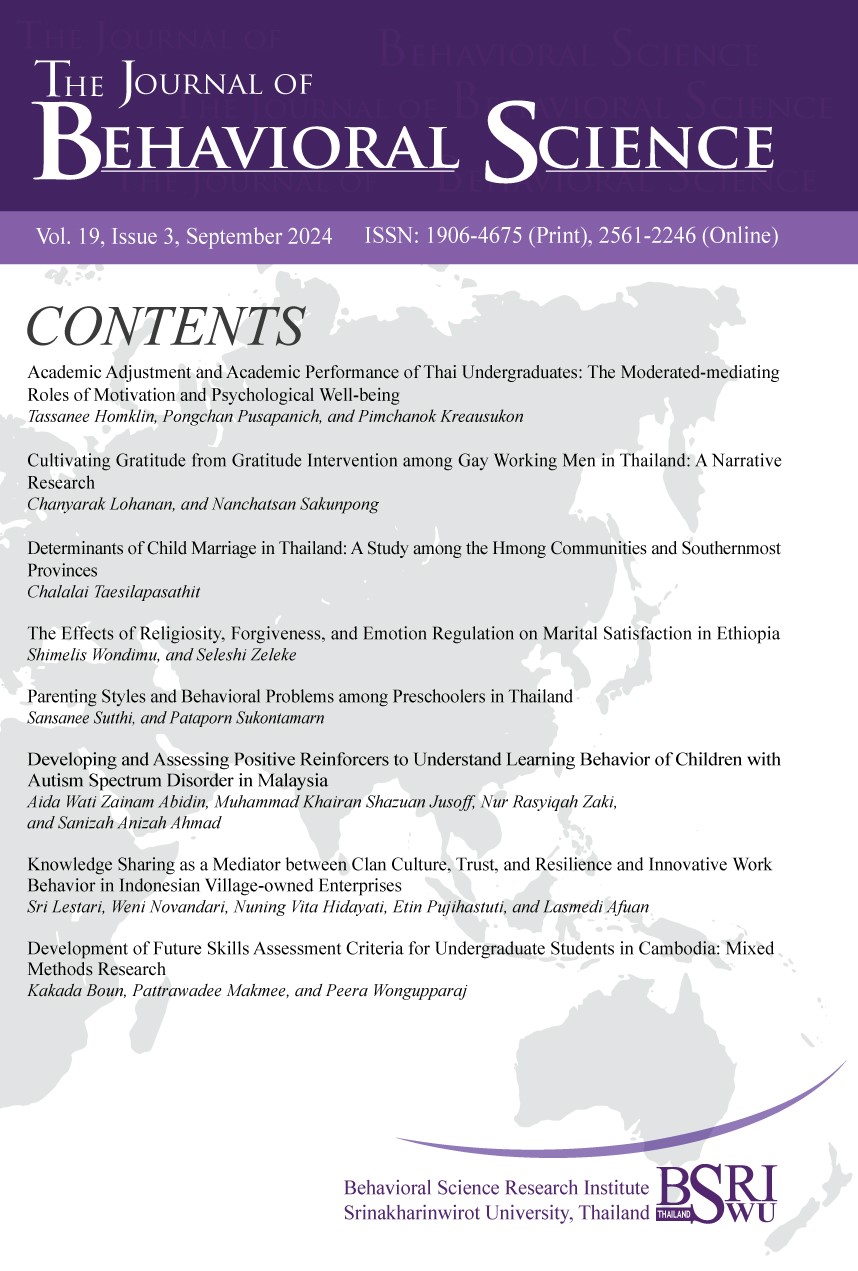
Background Children who are exposed to domestic violence are at high risk of developing behavioral problems, which may have long-term consequences into adulthood. Parenting practices used within the family, or รูปแบบการเลี้ยงดู (parenting stylesChildren who are exposed to domestic violence are at high risk of developing behavioral problems, which may have long-term consequences into adulthood. Parenting practices used within the family—particularly the use of harsh discipline—may lead to child maltreatment and negatively affect children's emotional development. This study aims to explore the relationship between parenting styles, child maltreatment, and behavioral problems in early childhood in Thailand.
The results found that ภาวะขาดสมาธิ (inattentionis the most problem behaviors found,40.2%In addition, it was found that certain parenting styles เผด็จการ (authoritarian), ผสม (hybrid), และ เพิกเฉย (neglectfulwere significantly associated with children's aggressive behaviors. In particular, neglectful parenting showed a clear correlation with aggressive behavior (among boys: ...) AVE = 0.18, p < .01girls AVE = 0.16, p < .01) However, no significant association was found between parenting styles and children's socialization problems. In addition, neglectful parentingpermissive parentingwas not significantly associated with children's behavioral problems when compared to authoritarian parenting.authoritative parentingother factors such as เพศ (gender), เวลาที่ใช้หน้าจอ (screen time), สถานที่อยู่อาศัย (location), รายได้ (income), และ โครงสร้างครอบครัวเลี้ยงเดี่ยว (single-parent family structurewhich was significantly associated with children's behavioral problems. This study highlights the significant impact of parenting styles on child behavior, particularly in relation to child maltreatment and aggressive behavior. The findings have important implications for both parents and early childhood educators, emphasizing the need to promote non-violent parenting practices.nonviolent parentingIt also calls for attention to social and environmental factors in order to effectively address children's behavioral problems and promote child well-being. The findings underscore the need for policies and practical guidelines to support families and educators in providing appropriate and nurturing care. Moreover, the study aligns with เป้าหมายการพัฒนาที่ยั่งยืน (SDG-5) the Sustainable Development Goals (SDG-5), which aim to achieve gender equality and empower all women and girls—particularly SDG-5.2, which targets the elimination of all forms of violence against women and children. SDG-5.2 ซึ่งมุ่งขจัดความรุนแรงทุกรูปแบบต่อเด็กและสตรี
Keywords Behavioral Problems, Child Maltreatment, Domestic Violence, Early Childhood, Parenting Styles
Author สรรษณี สุทธิ (Sansanee Sutthi) ปฐพรรณ สุคนธมาน (Pataporn Sukontamarn)
Methods: การวิเคราะห์ข้อมูล (Data analysis)
Journal Journal of Behavioral Science (TJBS)
For more infomation please click: https://so06.tci-thaijo.org/index.php/IJBS/article/view/272747